





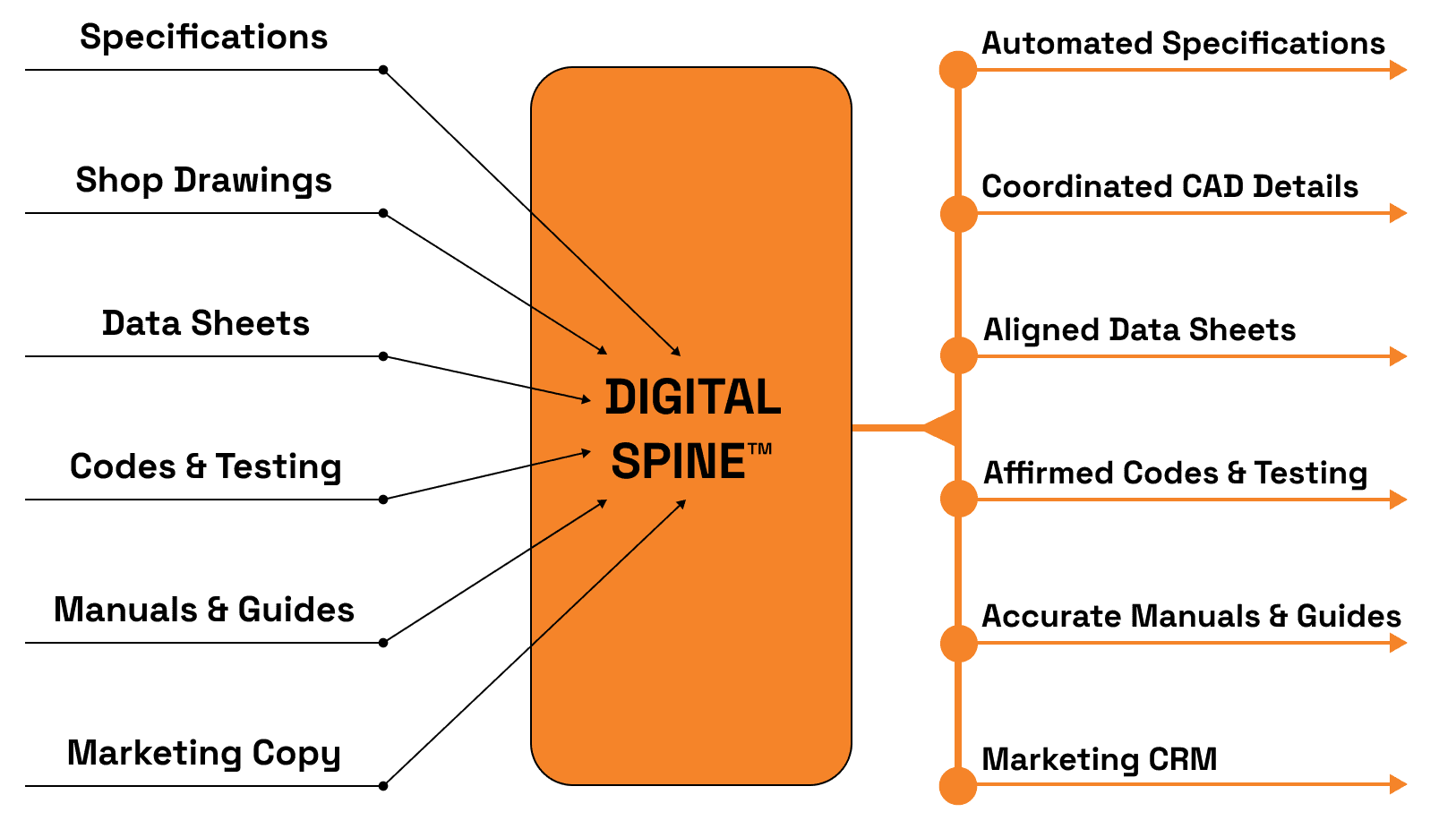

Architects Don’t Need a Pitch… They Need a Partner.
Let’s clear something up.
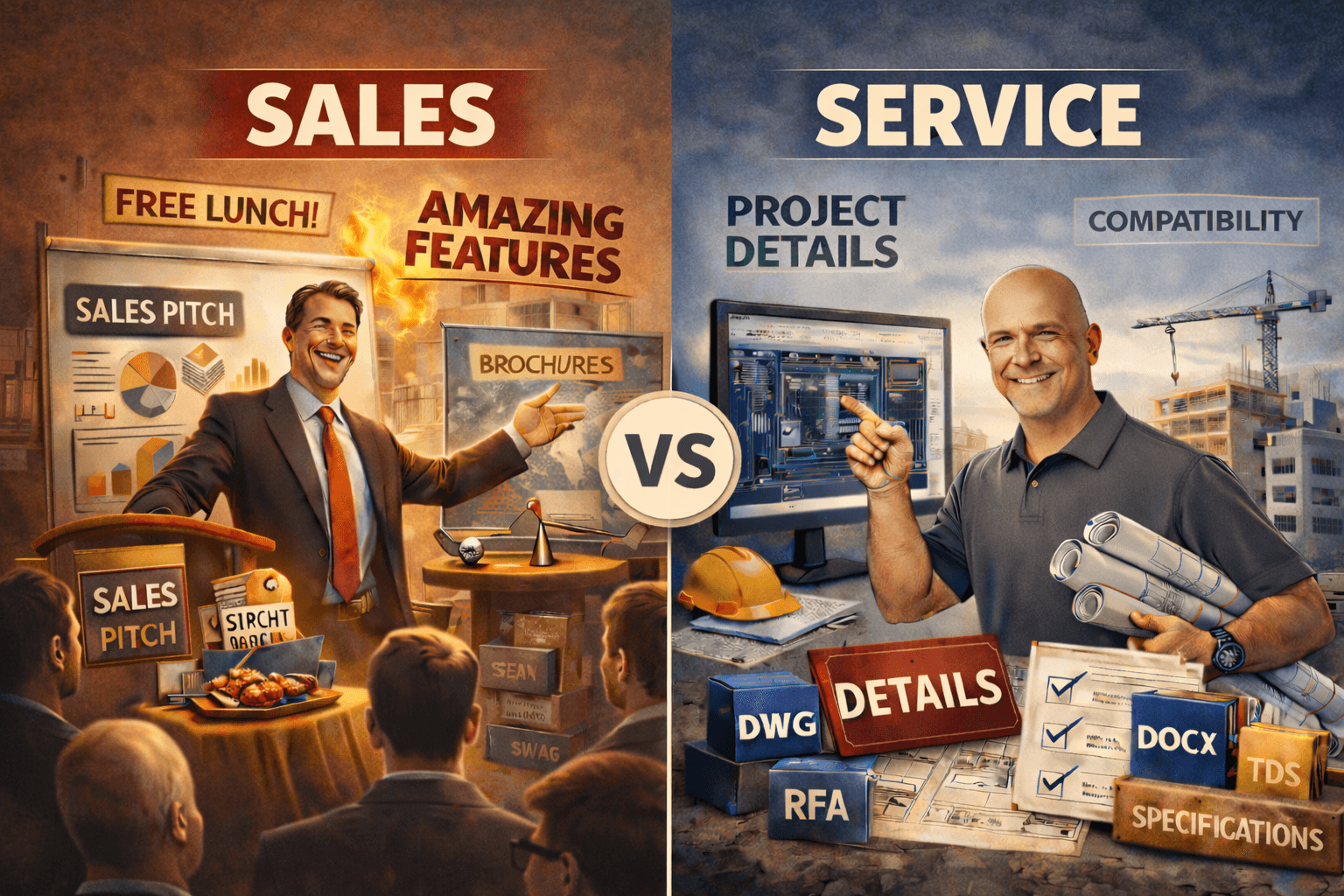
Architects don’t need another lunch. They don’t need another brochure. They don’t need another slide deck full of “amazing features.” They need a partner.
Someone who understands risk. Someone who understands coordination. And above all… someone who understands that drawings and specifications are contract documents… not marketing material.
Architects don’t buy building products. They don’t issue purchase orders, negotiate freight, or approve invoices. They influence. They specify. They detail. They coordinate. And when the curtain wall leaks… when the roof fails… when the expansion joint binds… when the air barrier doesn’t tie together… their name is still on the drawings.
So when a manufacturer sends an “architectural rep” into a design firm, the mission shouldn’t be to sell.
It should be to serve.
Architects don’t need a presentation… they need support.
The Disconnect
Manufacturers are assumed to be the experts in their product category. That’s the unspoken contract.
If you make roofing systems… you’re the roofing expert. If you manufacture glazing systems… you’re the envelope expert. If you produce firestopping, air barriers, waterproofing, wall panels, expansion joints, flooring, ceilings, sealants… you are the authority in that lane.
Architects, on the other hand, are responsible for all of it.
Every trade. Every interface. Every transition.
They are not experts in every fastening pattern, edge condition, substrate compatibility issue, movement calculation, thermal break requirement, or warranty nuance across every product in the building.
They can’t be, and shouldn’t have to be.
Yet too often, what do they get?
A glossy brochure
An 8½ x 11 PDF detail sheet
A canned guide spec that doesn’t match the detail
A lunch presentation heavy on features and light on coordination
That’s not service... That’s marketing.
If you’re the expert… act like it.
What Real Service Looks Like
If we want to build a real bridge between manufacturers and architects, we have to show up differently.
Service-focused architectural reps should be able to:
Provide project-specific details … not generic marketing sketches
Deliver those details in DWG format, layered and usable
Coordinate transitions with adjacent systems
Think beyond their scope line
Supply properly formatted guide specification sections
Ensure those specs are CONSISTENT with the details being issued
If you’re a roofing manufacturer… your parapet detail should align with the provided guide spec.
If you’re an air barrier manufacturer… your transition to windows and foundations should be thought through.
If you’re a window or curtain wall rep… your anchorage and perimeter conditions shouldn’t contradict the structural set.
If you manufacture interior systems… your specs shouldn’t fight the finish schedule.
Consistency matters.
A detail that shows one thing and a spec that says another isn’t just inconvenient… it introduces risk. And architects are the ones who carry that risk.
When a rep hands over coordinated, project ready DWGs and a spec section that drops cleanly into Division 03, 04, 05, 07, 08, 09 or wherever it belongs… without redlines and cleanup work…
That rep just became indispensable.
Details and specs win projects… not brochures and bad catering.
Speak Their Language. Use Their Tools.
Architects live in CAD. In BIM. In Revit families. In section cuts, keynote legends, schedules, and clash detection.
And in Word.
Because specifications are not an afterthought… they are contract documents. Carefully structured, carefully edited & carefully coordinated.
If you’re representing a product to architects, speak that language too.
Understand how your guide spec fits into Division formatting. Know how your product options should be structured. Make sure your spec aligns with your details. and above all, don’t hand them a pdf, forcing them to rewrite your section to make it usable.
And on the drawing side…
Don’t hand them something they have to redraw. Don’t give them something they have to reinterpret. Don’t make them reconcile your spec with your detail.
Make their life easier and be the expert you’re assumed to be.
When you do that, something shifts.
You stop being “the rep.” You become their envelope expert. Their interiors expert. Their roofing expert. Their go-to for movement, moisture, fire, thermal, or finish coordination.
You become the quiet hero when the deadline is tight and the details need to work.
Use their tools… earn their trust.
Golf Is Fine. Specs Are Better.
Relationships matter.
Lunch is fine. Golf is fine. Even the occasional well-executed lunch-and-learn has its place.
But let’s be honest…
You’ll get far more mileage from a clean spec and coordinated details than you will from nine holes and a steak dinner.
Architects remember who helped them solve a tricky expansion joint at a wonky transition; or caught a compatibility issue between sealant and substrate; or turned around a customized roof edge or window head detail in DWG format before a deadline.
And none of it required surgery to make it useful.
Service builds loyalty… not swag.
A Two-Way Bridge
There’s another side to this.
Architects should lean in when a manufacturer shows up this way.
When a rep offers real coordination… real detailing support… real specification assistance… use them... push them... expect expertise; and hold them accountable to the standard they claim.
The best architectural reps want that, because when service replaces sales pressure, trust follows... and when trust follows; influence becomes natural.
Trust turns influence into specification.
The Bigger Opportunity
The construction industry doesn’t need louder salespeople, it needs better technical partners.
Manufacturers who understand this will win specifications more consistently… not because they pushed harder… but because they reduced friction and reduced risk.
That is the bridge.
Service over sales. Details over brochures. Coordination over charisma.
It’s a model that works.
And for those of us who operate that way… who believe that exceptional service is the strategy, not the afterthought, it becomes less about chasing projects, and more about being invited into them.